Embark on A JOURNEY and explore the beauty of
KAZAKH TRANSHUMANCE.
WHAT IS TRANSHUMANCE?
POINT HERE TO LEARN
TRANSHUMANCE is the seasonal movement of pastoralists with their livestock from one pasture to another along traditional paths. Depending on the region and specific pastoral culture, these migrations may be undertaken by professional shepherds alone or by entire households moving with their animals. In mountain regions, this typically involves moving herds to high-altitude summer pastures to take advantage of fresh vegetation and returning to lower valleys or plains in winter to avoid harsh weather. In other landscapes, seasonal movements may occur across plains, steppes, deserts, savannahs in response to changing grazing conditions, water availability, etc.
c. 10,000 – 8,000 BCE
Domestication of Livestock
“Archaeology and history indicate that pastoralism – defined as a way of life centered around the herding of domesticated herbivores, sometimes involving stationary and other times mobile existence – stretches back thousands of years in many regions of Asia, Europe, Africa, and South America.
In the twenty-first century, pastoralism still supports several hundred million people on these continents, with herders relying predominantly on the same species of animals that their ancient counterparts domesticated and tended.”
Emily Hammer, The Archaeology of Pastoralism, Mobility, and Society, (Cambridge University Press, 2025)
ANTIQUITY – XX c. CE
THE SEDENTARIST BIAS
Historical record is assymetrical. For millenia, the histories of pastoralists were chronicled by sedentary civilizations. As the authors of the majority of surviving written sources these societies often portrayed them as uncivilized barbarians, unstable, or ‘backward’.These enduring perceptions shaped political thought, scholarship, policies, social systems that privileged settled agriculture over pastoral mobility.
XXI c. CE
A CHANGING PERSPECTIVE
In the face of climate change and biodiversity loss, researchers and international organizations increasingly recognize pastoral mobility as a form of climate adaptation and sustainable rangeland management. Ecological knowledge of indigenous peoples is now viewed as an important resource for building resilient socio-ecological systems.
2023
UNESCO ACKNOWLEDGMENT
Inscribed in 2023 (18.COM) on the Representative List of the Intangible Cultural Heritage of Humanity:
“An ancestral practice, transhumance stems from a deep knowledge about the environment and entails social practices and rituals related to the care, breeding and training of animals and the management of natural resources. An entire socio-economic system has been developed around transhumance, from gastronomy to local handicrafts and festivities marking the beginning and end of a season. Families have been enacting and transmitting transhumance through observation and practice for many generations.”
INNOVATING FOR SUSTAINABLE LIVESTOCK SYSTEMS
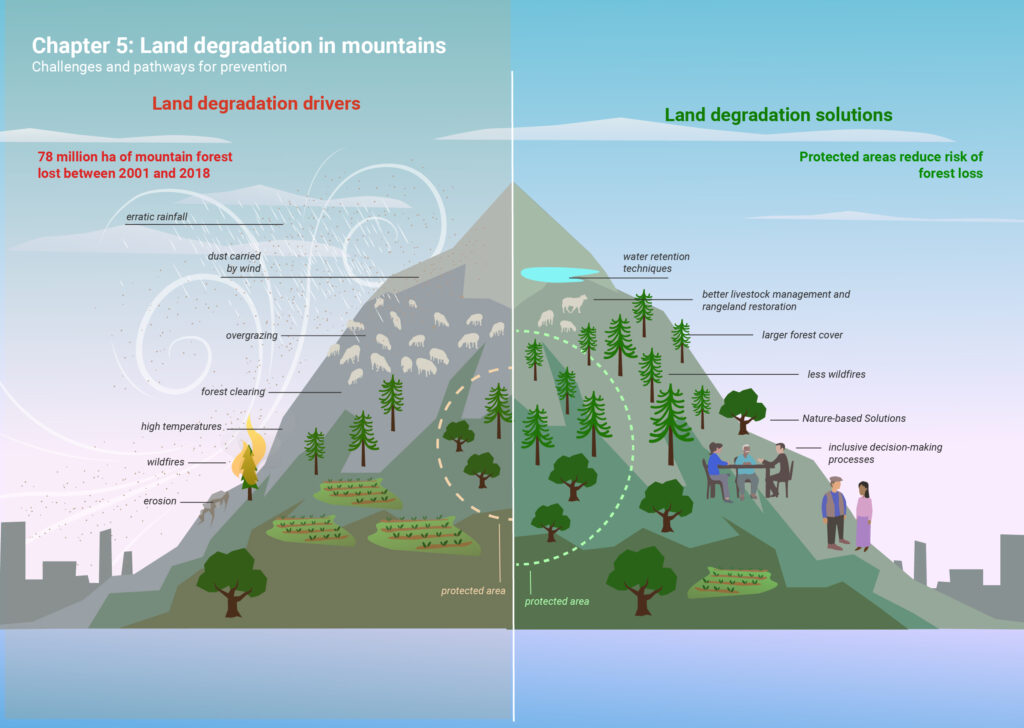
The graphic presents a familiar conservation scenario: reducing livestock pressure and expanding protected areas are projected to produce more favourable outcomes for degraded mountain landscapes. Yet this relationship is more complicated than the map suggests. Allan Savory’s influential ‘Holistic Management’ thesis, although highly contested and not a settled scientific consensus, challenged the assumption that livestock are necessarily agents of degradation, arguing that appropriately managed herbivores can contribute to soil processes, vegetation dynamics, and the reduction of wildfire risk. More recent research has likewise reopened the question. The PASTRES programme argues that rangelands are dynamic, open ecosystems that have evolved with grazing and fire, and that mobile livestock can support biodiversity, disperse seeds, connect ecological patches, and reduce accumulated vegetation that can fuel wildfires. It also questions whether tree planting, livestock exclusion, or rewilding should automatically be treated as the default solutions for rangeland restoration. The emerging debate asks a more useful question for our landscape: not simply how many livestock an ecosystem can support, but what kinds of animals, mobility patterns, grazing regimes, and human management allow pastoralism and ecological health to coexist?
TRANSHUMANCE AND CLIMATE CHANGE
CURRENT UNESCO NOMINATION INCLUDES FEW EUROPEAN COUNTRIES:
Albania, Andorra, Austria, Croatia, France, Greece, Italy, Luxembourg, Romania and Spain
THIS EXHIBIT covers the practice of transhumance in the South-Eastern Kazakhstan, as well as the cultural landscape it has produced.
THE PASTORAL LANDSCAPE OF EURASIA
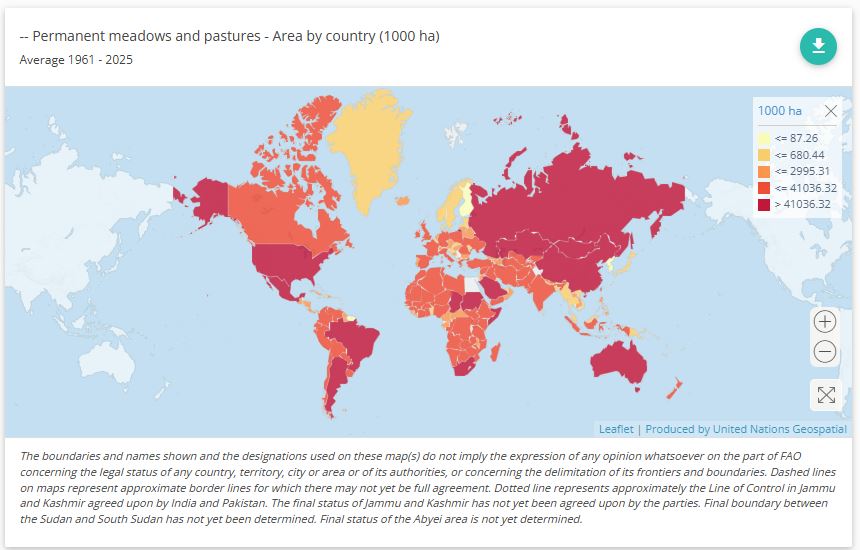
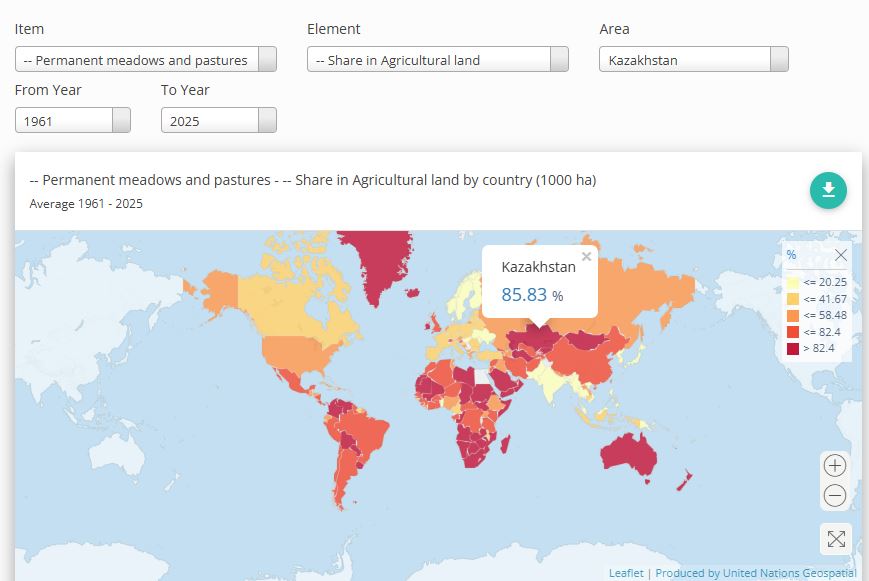
The Extent of Permanent Meadows and Pastures
Source: FAOSTAT (Food and Agriculture Organization of the United Nations)
Permanent Meadows and Pastures as a Share of National Land Area in Kazakhstan
Source: FAOSTAT (Food and Agriculture Organization of the United Nations)
TRANSHUMANCE IN SOUTH-EASTERN KAZAKHSTAN
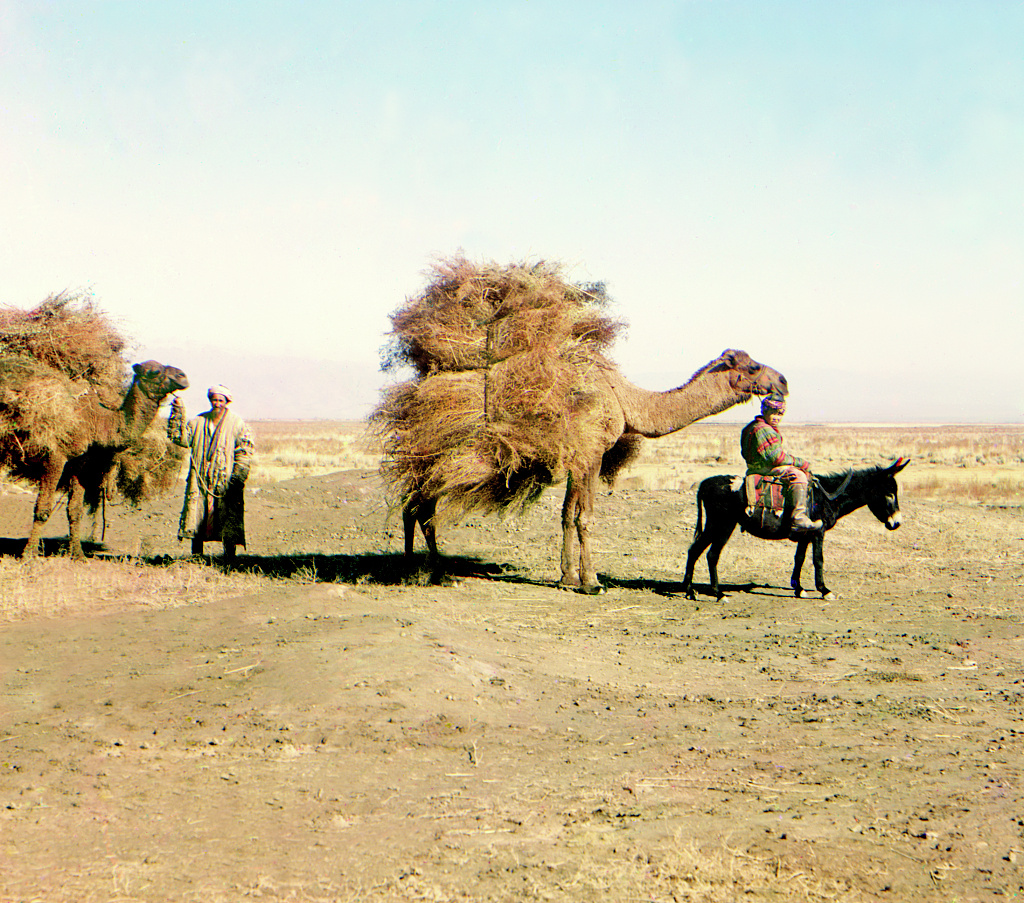
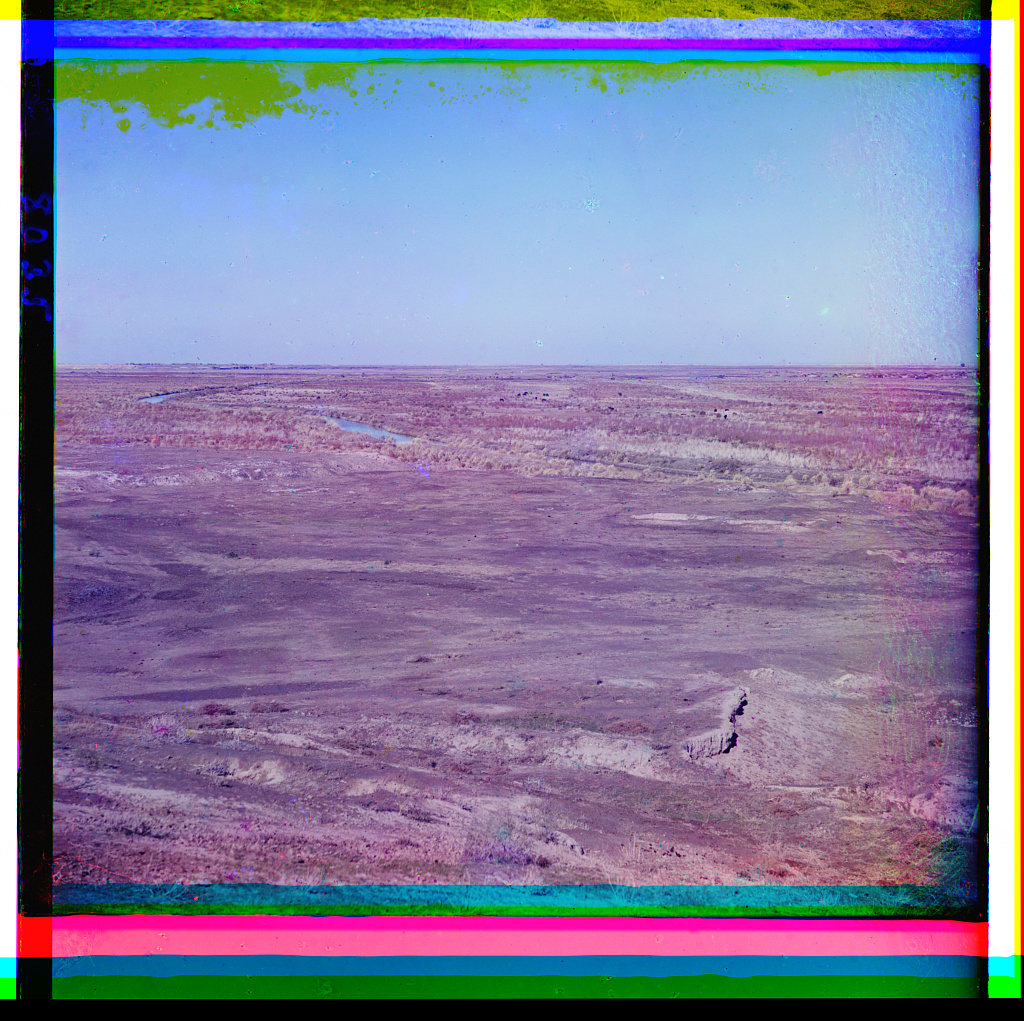
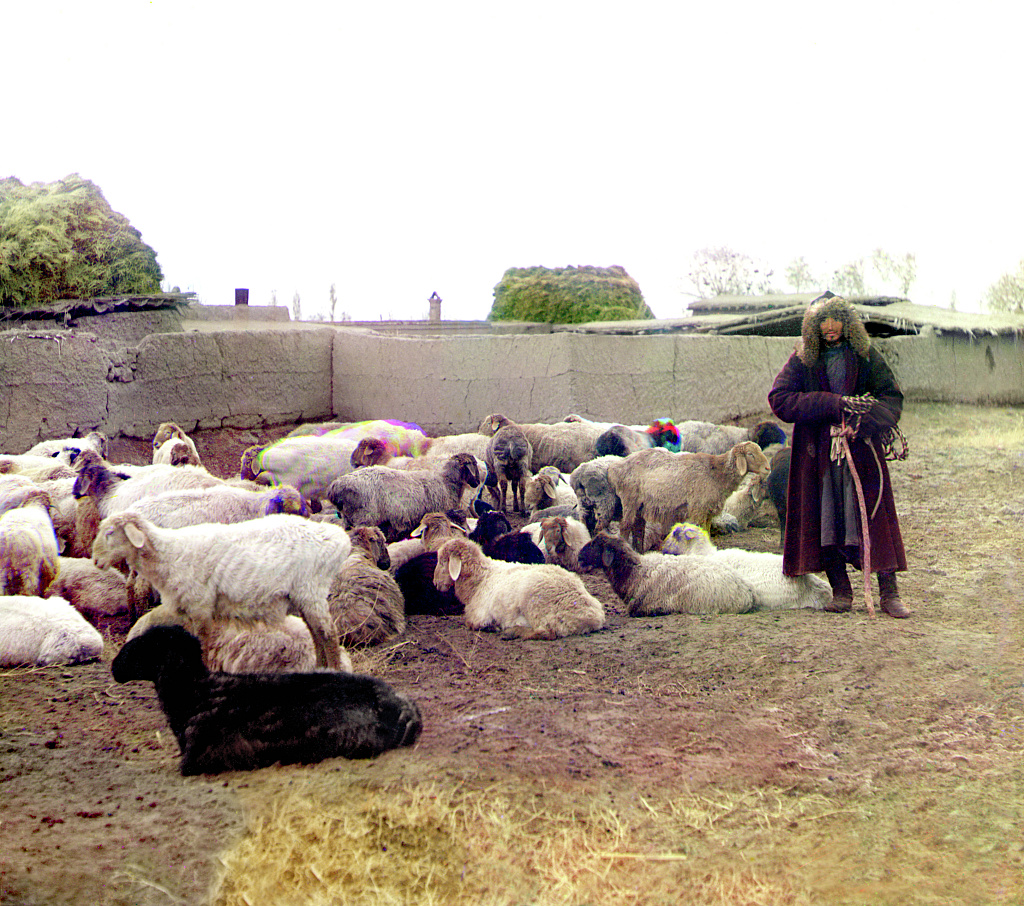
PRE-TSARIST ERA
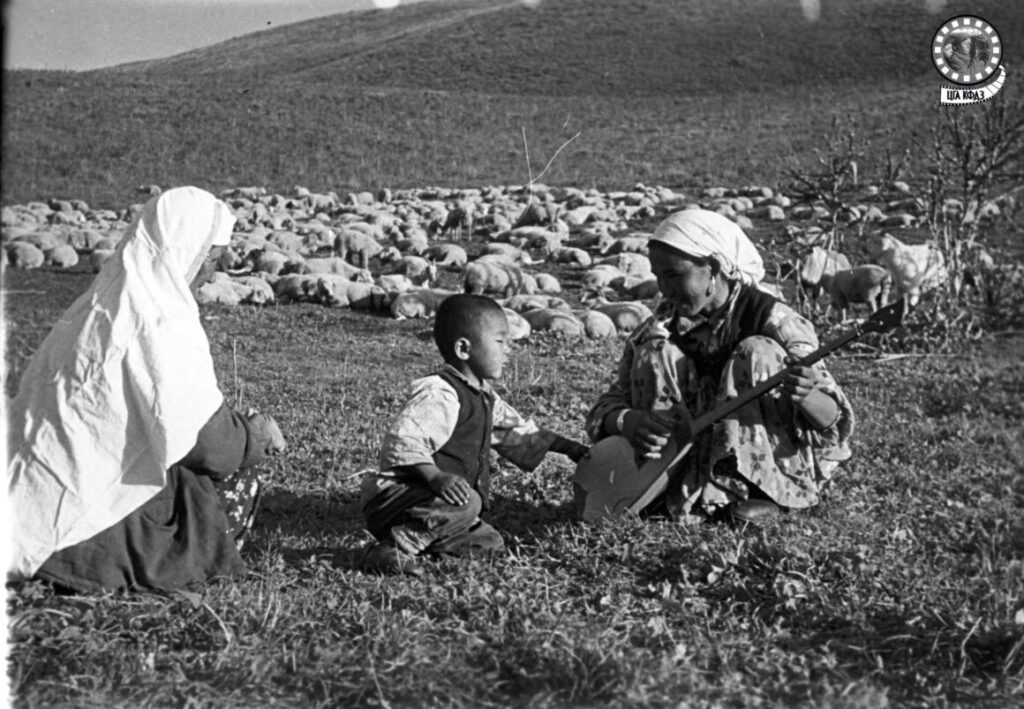
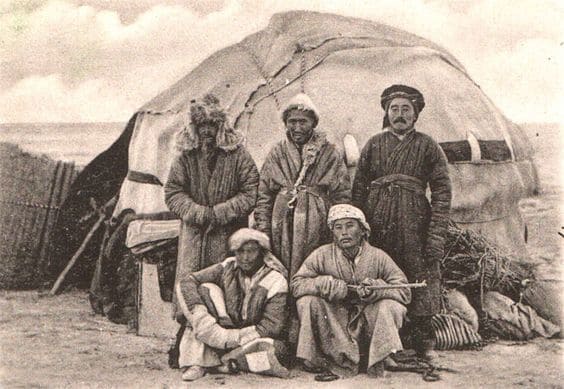
Pastoral life was organised around mobile livestock herding and seasonal movement between different grazing grounds. Kinship-based groups coordinated access to pastures and moved livestock according to seasonal conditions.
XVIII c.CE – 1917
RUSSIAN IMPERIAL PERIOD
Russian expansion into the Kazakh steppe brought new administrative and economic structures that disrupted established patterns of pastoral land use and mobility. The relationship between Kazakh pastoral communities and their rangelands was progressively reshaped.
1917 – 1991
SOVIET KOLKHOZ
Collectivisation reorganised livestock production into collective and state farms, replacing earlier kinship-based systems of pastoral management. Mobility and pasture use were consequently managed through Soviet agricultural institutions rather than autonomous pastoral communities.
1991 – Present
INDEPENDENCE
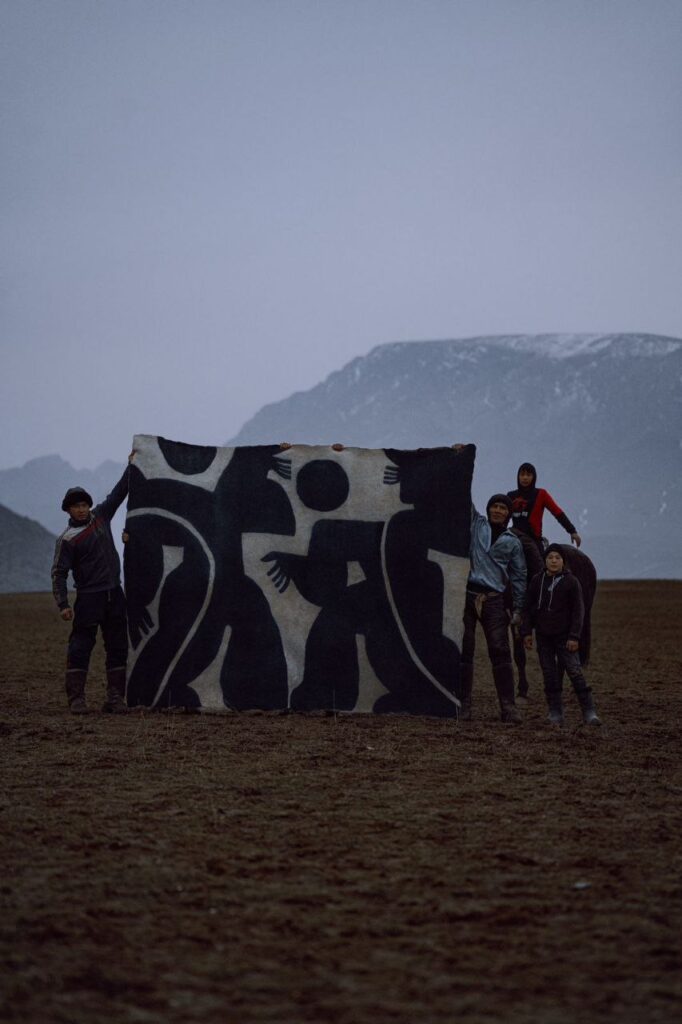
The dissolution of collective farms shifted livestock ownership towards private and predominantly small family farms. Without the land, labour, and institutional support required for extensive mobility, many households became more sedentary, concentrating grazing around villages and accessible pastures. At the same time, larger-scale producers with greater access to land and capital have been able to maintain or reintroduce mobility alongside intensified production.
INTERACTIVE MAP OF LOCAL TRANSHUMANCE
Explore the local transhumance routes through our interactive map. Researchers, governors can follow seasonal movements and pastoral sites.
VALUE NETWORKS
Transhumance is sustained not only by the movement of herders and livestock, but by the network of people, skills, products, and local services that surrounds it. Explore the value network behind the seasonal routes and discover how pastoral production connects communities, landscapes, and markets.
OUR SIMPLIFIED VISION OF PASTORALIST VALUE NETWORKS IN KAZAKHSTAN
TRANSHUMANCE IN KAZAKH CULTURE
Beyond the Pasture
Explore the literature, poetry, stories, and cultural expressions shaped by transhumance.
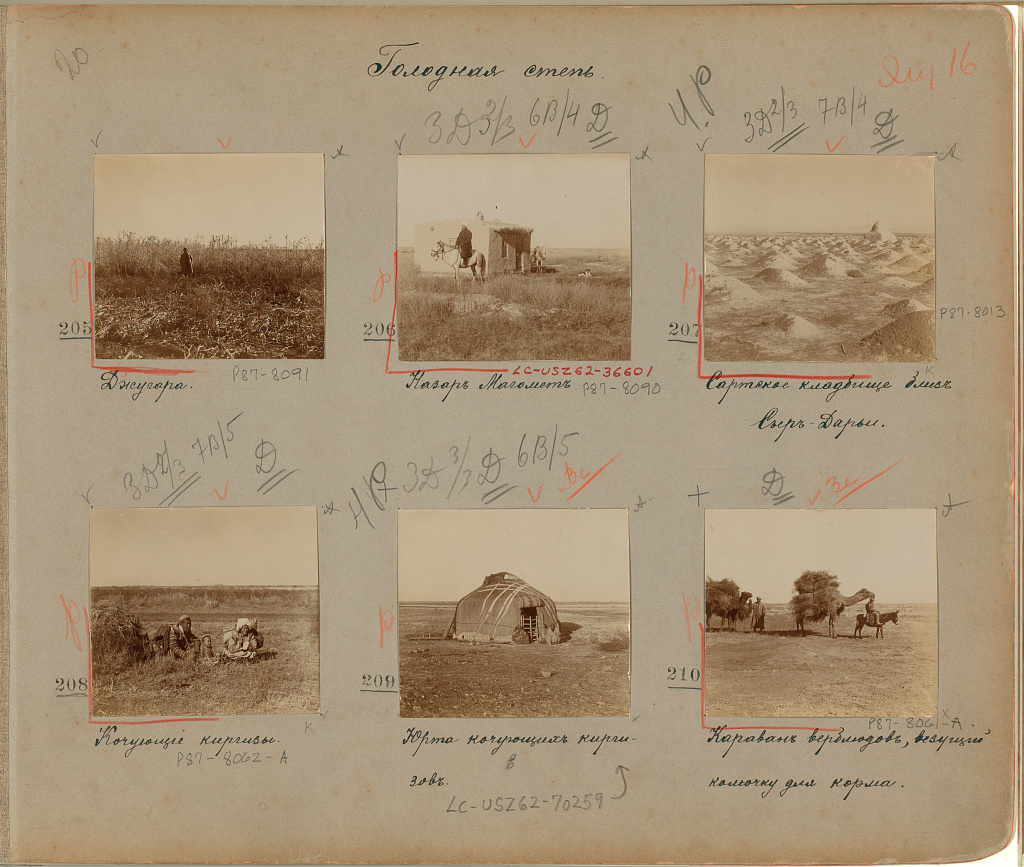
DISCOVER HIKING TRAILS THAT FOLLOW TRANSHUMANCE ROUTES, STOP AT HOTSPOTS TO MEET PEOPLE, AND BUY LOCAL PRODUCE ALONG THE WAY
LET US KNOW WHAT YOU THINK
Questions are more than welcome